
A tribute to Michael B.V. Roberts
Michael Bliss Vaughan Roberts, known to his friends and colleagues as ‘Mike’, died on the 12th September 2025, after a long illness. Mike was a pre-eminent author of Biology textbooks for schools. This article is based on the eulogy delivered by Chris Rouan at Mike’s funeral in Bournemouth, and personal reminiscences by some of Mike’s colleagues and friends. (Mike’s colleagues invariably became friends, and he became a significant figure in their professional lives.)
Mike was born in Shropshire and educated at Epsom College, gaining a first-class honours degree in Natural Sciences at Queen’s College Cambridge, followed by an MA and a PhD in 1960.
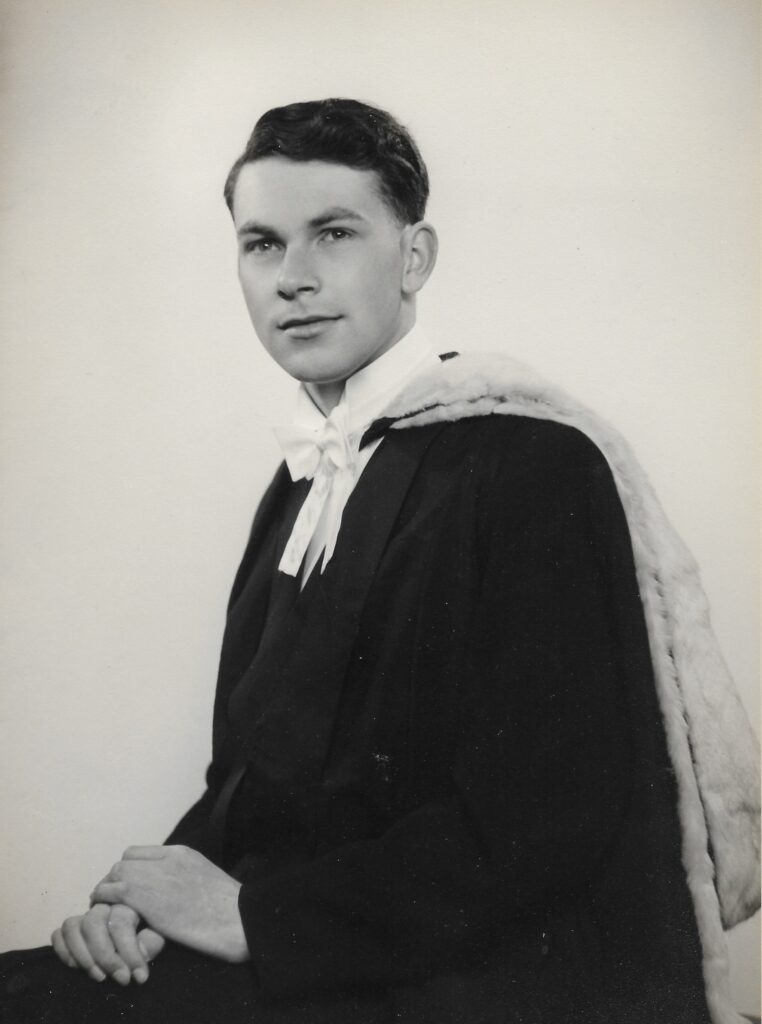
He shared undergraduate classes with the polymath Jonathan Miller, who became (among many other things) a respected theatre director. Miller was an accomplished mimic and used to caricature well-known Cambridge academics, much to Mike’s great amusement.
Mike became friends with Brian Bush, who fondly remembers sharing neurobiological conversations over coffee and meals in their colleges. Brian was a recent arrival in England from South Africa; Mike took him under his wing and even arranged for them to stay with his family during the Christmas vacation.
Mike’s acts of kindness and generosity and gentle-sharp sense of humour are some of the many qualities that his friends appreciated throughout his life.
The 1950s were a golden time in Cambridge. The iconic paper by Hodgkin and Huxley on the chemistry of the action potential appeared in 1952, and neurophysiology was a rapidly expanding field. For his PhD, Mike chose to work on the neurobiology of the earthworm escape response, under Professor C.F.A Pantin, F.R.S. This required considerable dissection expertise, a good eye and steady hand.
Mike became a demonstrator in the Zoology department, and this allowed him to develop the calm, clear exposition that became the foundation of his teaching and his future writing.

In September 1959, Mike was appointed to Marlborough College, in succession to Sir Francis Knowles, F.R.S. This was a remarkable achievement for a 24-year-old taking up his first teaching post. The College records that he:
“was a brilliant teacher. He had a pleasantly relaxed style underpinned by meticulous preparation. He worked hard to excel at the craft of teaching and welcomed the opportunity to try out new ideas and discuss problems.”
Mike was fortunate to enter the world of biology education at a pivotal moment. The rigid separations between botany and zoology and between structure (anatomy) and function (physiology) were being challenged within universities and in new school curricula.
School biology was seen as overly descriptive, fact-heavy, and outdated, with little emphasis on modern experimental science. To this end, in 1962, Mike became a Fullbright Scholar in the University of California, Santa Barbara.
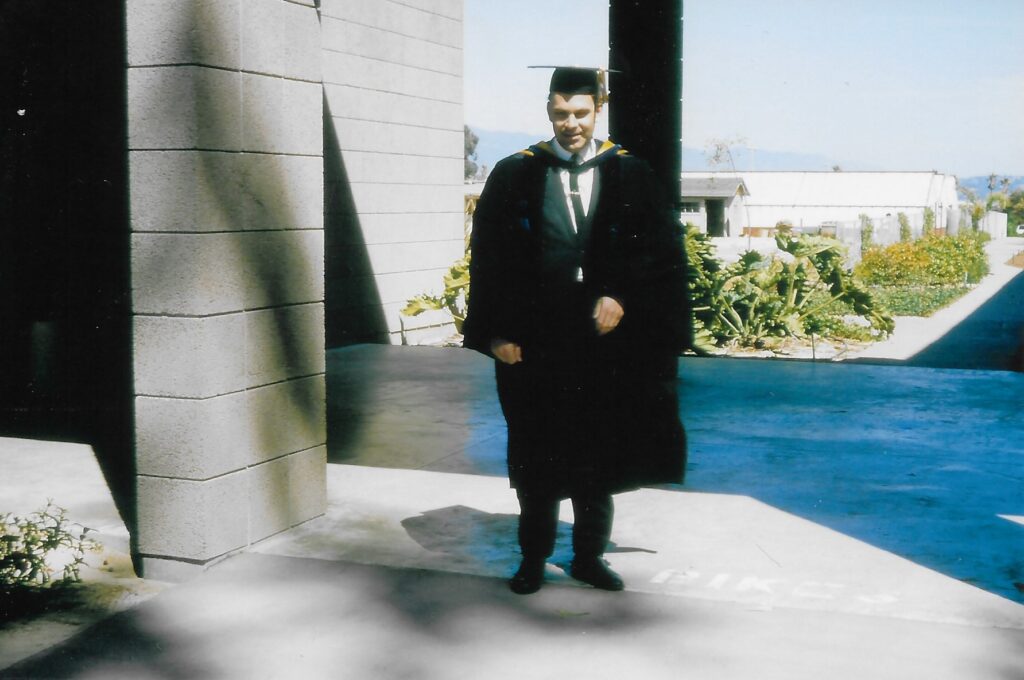
Here, he became acquainted with the school curriculum reforms that were developing through the Biological Sciences Curriculum Study (BSCS). Mike brought these ideas back to Marlborough and became immersed in curriculum reform at local level with kindred spirits at St Paul’s and Haberdasher Aske’s. Their revised A-level syllabus was accepted by the Oxford and Cambridge Examination Board in 1967.
It was, perhaps, inevitable, that Mike would be drawn to the national scene, joining the committee of the Nuffield Science teaching project, responsible for the innovative (and redoubtable) Study Guide. He contributed his own research on earthworms to the Study Guide. Interestingly, these ideas, now called habituation, still form part of the Salter’s Nuffield Biology A-level course (now called Pearson Biology A).
A new course requires a new textbook, and Michael began writing. The first edition of his A-level textbook, Biology: a Functional Approach (BAFA) appeared in 1971 and was an immediate success. It ran through four editions and sold over a million copies. Its accessible style, simple diagrams and clear text were welcomed by students across the world. There are many people who claim that “Roberts” got them their A-level grade. As Michael Reiss puts it:
“For any biology teacher of my generation, ‘Roberts’ referred not to the man but to Biology: A Functional Approach. It is difficult to overstate what a total breath of fresh air this was when it first appeared. I relied on it myself in my first year or two of A-level teaching.”
Mike soon became a publishing industry: practical guides, teachers’ guides and classroom resources all followed. He foresaw the advent of podcasts by fifty years with his tape-recorded discussions with famous scientists, including sets of 35mm slides. Mike became an international author, teacher and examiner. He became a Fellow of the Royal Society of Biology and sat on its publications committee. He was a chief examiner for the Common Entrance Examination.
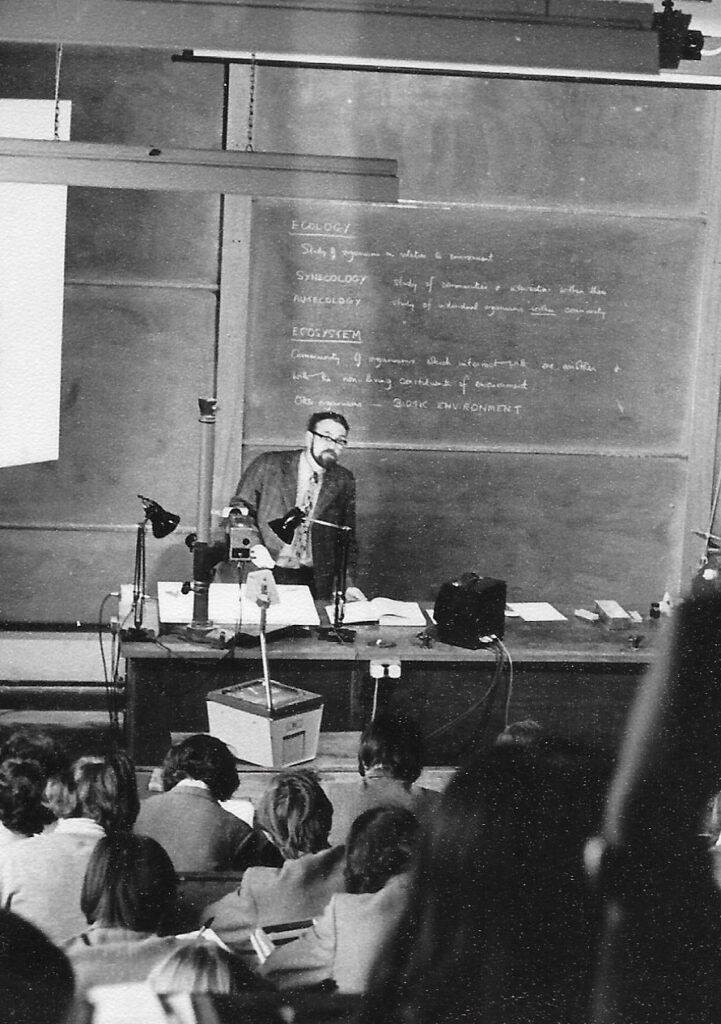
By the late 1970’s the rise of comprehensive schooling led to the need for a single examination, replacing O-levels and CSEs. This influenced discussions of a new style of book aimed at 14–16 year-olds. Mike moved to London in 1976 and began to write “Biology for Life”, which was written for a wide range of readers.
At the same time, he was a research associate at the, then, Chelsea College in London, and was involved in teaching on the Post Graduate Certificate of Education. Ann Fullick, herself now a prolific textbook writer, recalls:
“Mike’s books inspired a love of Biology in so many students. As a PGCE tutor at Chelsea, he was incredibly supportive, mindful of the challenges and joys of teaching in London comprehensive schools – and took us on a ‘field trip’ to Marlborough, to show us another world and treat us to afternoon tea…He was an outstanding role model.”
Chris Rouan taught with him at Cheltenham College in 1980, and this led to a lasting friendship. He recalls:
“although he was my biological guru – working with Mike Roberts had its challenges. He had an irreverent sense of mischief and fun and liked to play pranks on unsuspecting students – for example convincing them that a dish of tadpoles were indeed the spermatozoa of an elephant. Absurd on so many levels.”
BAFA had a remarkably long shelf life. Its successor, ‘Advanced Biology’, written with Michael Reiss and Grace Monger, did not appear until 2000.
Michael Reiss reflects:
“one of the great honours of my life was when, some years later, Michael asked Grace Monger and me to collaborate with him on a successor to ‘Roberts’. I recall how at the first meeting of the three of us with the prospective publisher to discuss the project we had lobster in aspic with a Montrachet. Once the contract was signed, the next lunch was sandwiches.”
Although good food and company was one of the great loves of Mike’s life, he also knew when to roll up his sleeves and go to work.
The move towards Dual Award Science caused him some disquiet, but the nelsonscience “Biology” book, written with Neil Ingram, did have the look and feel of Biology for Life’s ‘little brother’. It sold well and was popular in schools.
It was Mike’s tenacity and patience that generated such quality textbooks. He was meticulous in fact-checking every detail in his books: he was a prodigious letter writer to academics around the world. Even the smallest mistake would cause him real disquiet, as he impatiently waited for a chance to correct it in future impressions. In the days before desktop publishing, any changes had to be made within the line, and he became very adept at micro-editing his writing.
Mike paid particular attention to the diagrams in his books. Jenny Chapman recalls, in the days when faxes were the fastest way of communicating text and diagrams, [Mike and I]:
“faxing each other improvements to our diagrams until we both came to a common view.”
Mike was also keen photographer and supplied many of his own photographs, taken on his travels around the world. One of those pictures (in Biology for Life) was of the ill-tempered and disobedient Daniel the Spaniel – whose claim to fame was not a result of Mike’s impeccable training, but an incidence with an unsuspecting dog lover – Danny was tied up outside a shop, a lady innocently bent over to pat him, upon which, he jumped up and bit her on the nose, drawing quite a lot of blood – Mike was mortified – he never went back to that shop again. (He also bit Neil Ingram on the first occasion of their meeting, something that Mike saw as a rite of passage.)
One of the key hallmarks of a Roberts’ book was the attention he paid to the details of all the different syllabuses. This means it could be used profitably by everyone. The move towards examination awarding bodies approving particular textbooks for use on their courses, brought the end to the universal textbook and led Mike to consider a gentler retirement.
Mike and his devoted partner, David Alford, an accomplished cook, were joint proprietors of a small country hotel in Devon, where Mike was the front of house ‘maître ‘d and sommelier’. So well organised, it was as far from Fawlty Towers as one can get!
Mike was also a loving and devoted father and grandfather, and his son Phil, recalls that he was:
always interested in what everyone was up to, truly supportive and never judgemental… As ever, he was only too keen to share anecdotes and entertain his children and grandchildren with his keen regard for the ridiculousness and silliness of life”.
An accomplished artist, he found time to draw, paint and write limericks. His later years were more difficult has his illness took hold. Chris Rouan remembers:
“I leave you with a final cameo of the great man – at over 90, wheelchair-bound, trapped so cruelly and tragically in his Parkinson’s prison, and yet to the very end, his love and support for family and friends, his kindness, his wonderful sense of humour, his bravery, his nobility remained undiminished.”
He leaves behind him a lasting legacy and strong influence on biology teaching around the world and an indelible imprint on the people lucky enough to write with him. Michael Reiss speaks for us all when he says:
Michael was a wonderful co-author. Despite being far more experienced than I was, he never treated me as a junior partner. The quality of his writing was superb and I learnt so much from him about clarity and directness – with the occasional flash of humour or anecdote to keep the reader entertained.
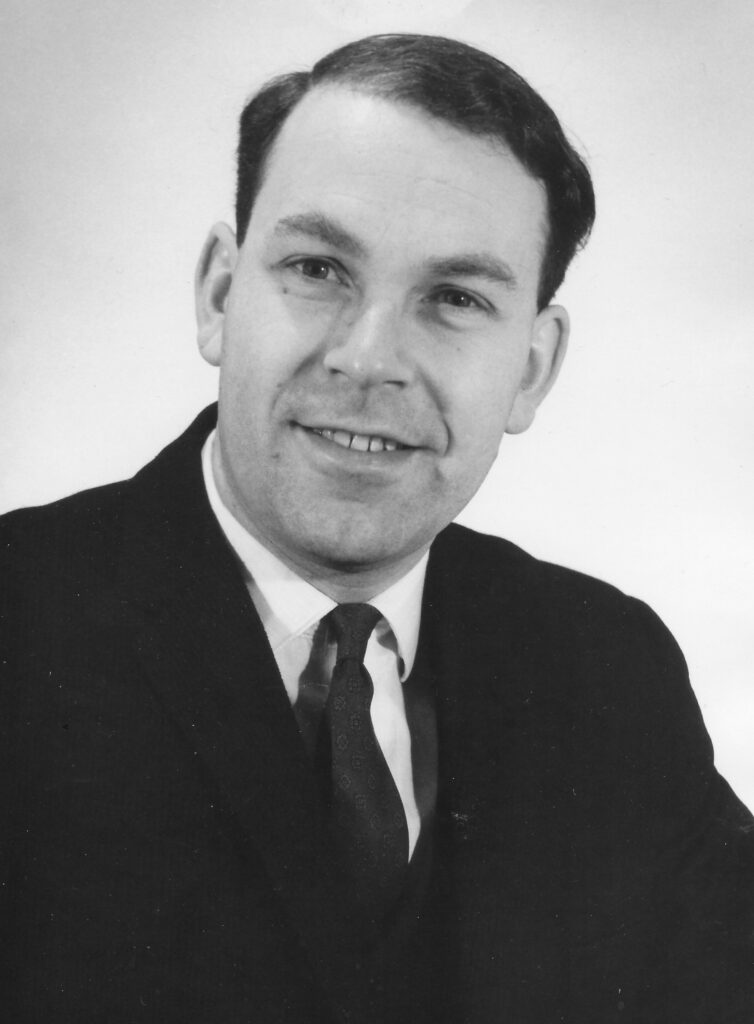
Neil Ingram and Chris Rouan
January 2026